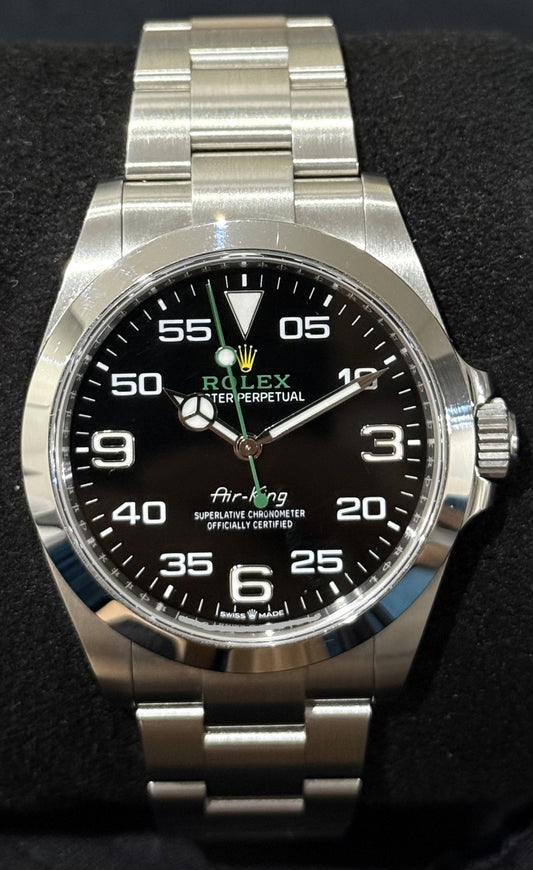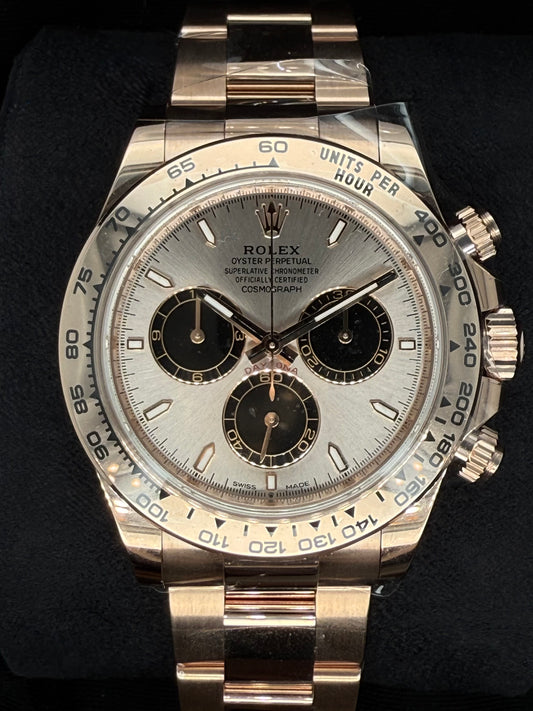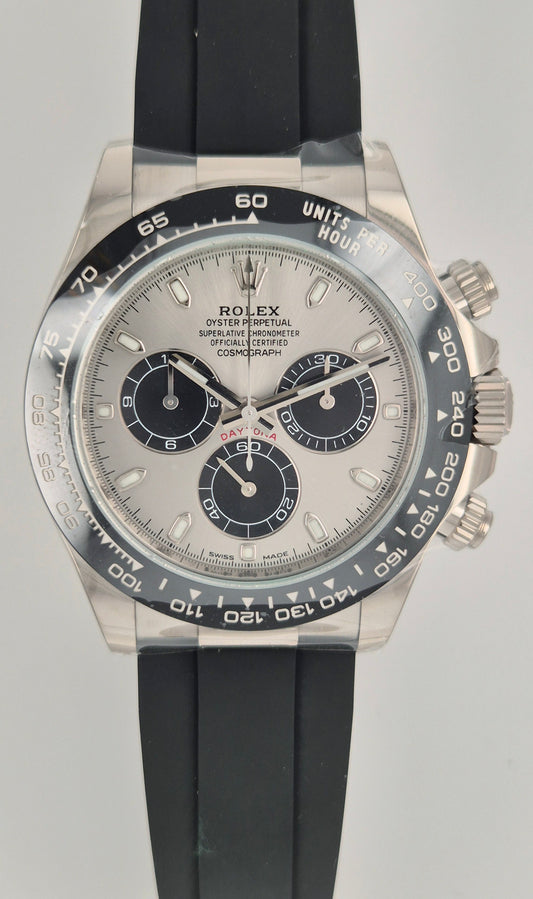
Rolex Reference Numbers: A Collector's Guide
Share
If you have ever searched for a Rolex online, you will have noticed that every watch seems to come with a string of numbers that collectors can identify almost instantly.
For someone new to Rolex, they can look like nothing more than a series of numbers and letters. But once you understand what a reference number actually represents, it becomes one of the most useful pieces of information when comparing watches.
One thing I always tell clients, however, is not to become too focused on trying to “decode” every individual digit. Rolex reference numbers have changed over the years and the system is not a simple universal code where every number always means exactly the same thing.
The reference is better understood as an identifier for the particular model and configuration.
The reference tells you which Rolex you are looking at
Take the modern Datejust 41.
A reference such as 126334 identifies a particular Datejust configuration, while 126300 identifies another. They may both be 41mm Datejust watches, but the specifications are different.
The 126234, for example, is a current Datejust 36 in Oystersteel and white gold with a fluted bezel. Rolex offers the reference with different dial and bracelet configurations, so even within one reference family, the exact watch in front of you still matters.
This is why I always recommend using the reference number as the starting point rather than trying to memorise a formula.
When someone sends me a Rolex reference and asks what the watch is, I can immediately start narrowing down the model. From there, we look at the exact dial, bezel, bracelet, metal and year.
That is where the real detail begins.
Reference number versus serial number
Another common point of confusion is the difference between a Rolex reference number and a serial number.
They are not the same thing.
The reference relates to the model or configuration. The serial number identifies the individual watch. You can think of it in simple terms: the reference tells you what the watch is, while the serial helps distinguish that particular watch from another example of the same reference.
This becomes particularly important when buying pre-owned, as two watches can share the same reference number but have different years, conditions, warranty histories and ownership histories. They are the same model, but they are not necessarily the same proposition for a buyer.
Where to find the reference and serial numbers
The reference number identifies the model or configuration, while the serial number identifies the individual watch. Their locations can vary by model and production year, so treat these as general guides rather than a way to authenticate a watch.
The model reference is generally engraved between the lugs at the 12 o’clock side of the case, where the bracelet attaches. On many older Rolex watches, the serial number is engraved between the lugs at 6 o’clock. On many models from around the mid-2000s onward, the serial number is instead engraved on the rehaut, the inner ring around the dial, at 6 o’clock.
Checking between the lugs usually requires removing the bracelet. If you are considering this, have a qualified watch professional inspect it rather than trying to remove the bracelet yourself.
Checking the paperwork against the watch
If a watch comes with its warranty card or other paperwork, compare the reference and serial number shown there with the corresponding details on the watch. The paperwork should make sense for the model and its apparent age, but formats and details can vary across different periods.
A mismatch is a reason to pause and seek professional advice. But matching numbers are not proof of authenticity: paperwork can be separated from the watch or falsified, and matching details do not establish that the watch or its parts are genuine, original or in the stated condition.
Use the numbers and paperwork as clues, not as a substitute for a professional assessment. Our Quality Promise explains how The Watch Co Australia approaches the watches we offer.
What else should you check?
Once you know the reference, look at the year and condition. Check the dial carefully. Is it the original configuration? Is the bracelet correct? Does it have the box and warranty card? Is it unworn, like new or showing signs of wear?
These details can make a substantial difference.
For collectors in particular, the dial can be one of the most important parts of the watch. Two watches with the same basic reference can have very different appeal depending on their dial configuration.
Buying by reference, but choosing by the watch
Learning Rolex references is useful, especially if you are comparing several watches or researching the market. But I would not let the numbers take over the experience.
At The Watch Co Australia, we work with collectors who often know the reference they want before they arrive, as well as clients who simply know that they want a Rolex and need help narrowing it down. Our Bondi Junction showroom gives you the opportunity to compare different references, sizes, dials, bracelets and conditions side by side.
Sometimes the watch you thought you wanted on paper is not the one that feels right when you put it on your wrist — and that is often where the fun begins.